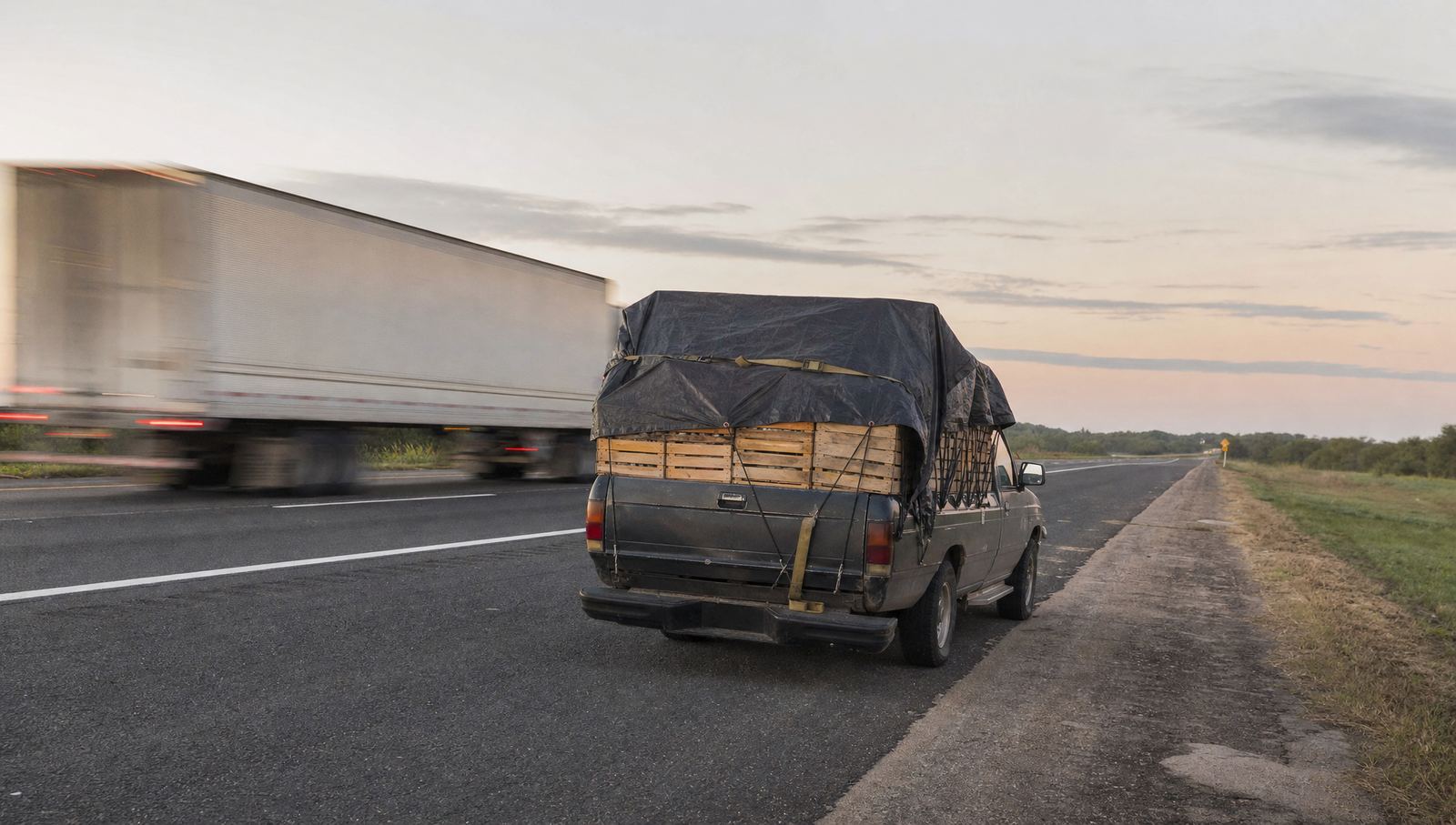
Hauling the harvest to Austin
Loading crates, leaving early and sharing two-lane highways with heavy trucks on the drive to a city market.
Austin's farmers markets draw more shoppers on a Saturday than most small-town markets see in a month, and plenty of Brazos Valley growers make the run. It is about a hundred miles each way, usually down State Highway 21 toward Bastrop and in on 71, or across on 290. The drive starts in the dark, and how it goes depends on how the truck was loaded the night before.
Load it the night before
Pack the truck in the evening, after the produce has been harvested, cooled and crated. Heavy crates of sweet potatoes, squash and melons go on the floor of the bed against the cab. Lighter crates of greens and herbs go on top and toward the tailgate, so they come out first and are never crushed. Coolers ride against the cab where the load moves least.
Strap every row down. Two ratchet straps across the crates and a tarp tied over the top keep the load from shifting in a hard stop and keep loose leaves off the road. A tarp that flaps loose at highway speed can tear in minutes, so check the ties. Do not stack higher than the cab; it catches wind and blocks the mirrors.
Leave early and plan for stops
Most city markets want vendors set up thirty to sixty minutes before opening. Add that to the drive and a margin for road work, and the alarm goes off early. Plan one stop at about the halfway point to check the straps and the tarp. Ice in the coolers will hold for the morning if the lids stay shut.
Sharing the road with heavy trucks
The two-lane stretches between the Brazos Valley and Austin carry gravel haulers, cattle trailers and freight rigs from before dawn. A loaded pickup handles more slowly than an empty one, and an eighteen-wheeler needs far longer to stop than either.
- Stay out of a truck's blind spots. If you cannot see the driver in the truck's side mirror, the driver cannot see you.
- Pass a truck quickly and only where you can see well ahead, and do not cut back in until the whole truck shows in your rear-view mirror.
- Give a truck room when it turns. Trailers swing wide and cut across the inside of a corner.
- Let tailgating trucks go by. Pull onto a wide shoulder or into a turnout where one exists rather than speeding up.
- Use the shoulder carefully in the dark. Shoulders narrow without warning on parts of these highways.
If something goes wrong on the road
Most market runs are uneventful. When one is not, the first job is safety: get out of traffic if the pickup can move, turn on the flashers and call 911 if anyone is hurt. Take pictures of both vehicles, the spilled crates and the lane before anything is moved, and swap names, plate numbers and insurance details with the other driver. The riskiest miles are often the last few, where 71 and 290 run into city traffic and stop-and-go lanes make rear-end collisions common.
For a grower, a wreck reaches past the repair bill. The crop in the bed is usually a loss, and every Saturday the pickup sits in a body shop is a market missed. Those losses are easy to leave off a claim when the other driver's insurer is pressing to close it, so growers who have been through one often go over the numbers with an Austin car wreck lawyer first.
The drive home
By early afternoon the crates are lighter and the cash box is heavier. Restrap whatever is left before pulling out of the market lot, and stop for coffee on the way back. The road is just as busy at two in the afternoon as it was at five in the morning, and a tired driver at the end of a long market day needs the same care as a fresh one at the start.