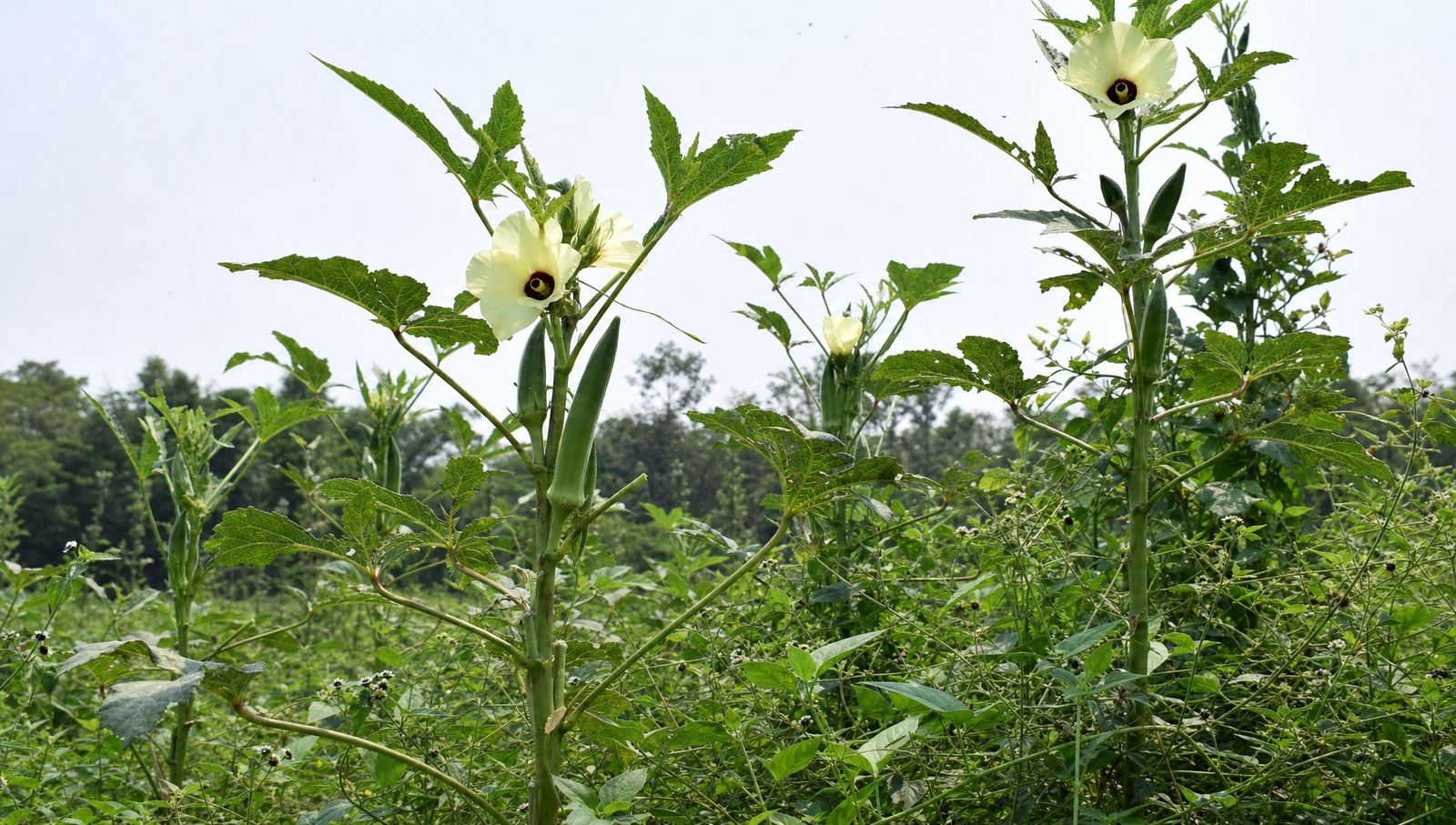
Okra, black-eyed peas and the crops that like the heat
A short list of vegetables that keep producing when everything else gives up.
A summer garden in the Brazos Valley does not have to be a fight. The trick is to plant crops that come from hot places and treat a hundred-degree afternoon as ordinary weather. Most of them go in after the soil has warmed in late April or May, and they carry the garden until fall.
Okra
Okra is the anchor of the hot season. Soak the seed overnight and plant once the soil is warm to the touch. Plants grow head high by midsummer and produce every day. Pick pods when they are about three inches long, because they turn woody quickly, and keep picking, since a plant that sets mature pods slows down. Wear long sleeves; the leaves and stems are prickly. Red-podded and spineless varieties do just as well as the standard green ones, and a few plants are plenty for a household.
Southern peas
Black-eyed peas, purple hulls and cream peas handle heat and dry spells better than green beans, and they add nitrogen to the soil as they grow. Pick them green for shelling or let a few rows dry on the vine for winter. Turn the spent plants into the soil before the fall planting.
Sweet potatoes
Set slips in May and let the vines cover the ground. Sweet potatoes need little care beyond an occasional deep watering, and the vines shade out weeds. Dig them before the first cool spell in October and cure them somewhere warm for a week or two to bring out the sugar.
Peppers, eggplant and greens for summer
Peppers and eggplant slow down in the worst heat but rarely quit, and they come back strong in September. Malabar spinach and amaranth stand in for lettuce in summer salads and stir fries. Yardlong beans climb a fence and keep producing long after bush beans have stopped.
Melons
Cantaloupe and watermelon love the long hot days, as long as they get steady water while the fruit is sizing up. Plant them in April on a wide mound with plenty of compost, let the vines run across the paths, and cut back on water once the fruit is nearly full size; the flavor concentrates as the soil dries. A cantaloupe is ready when it slips from the vine with a gentle push. A watermelon is ready when the curl nearest the fruit has dried and the spot resting on the ground has turned from white to buttery yellow.
What to watch for
Heat-loving crops still have pests. Stink bugs and leaf-footed bugs go after southern peas and tomatoes in midsummer, and they are easiest to control by hand-picking into a can of soapy water early in the morning, when they move slowly. Aphids cluster on okra leaves and are usually cleaned up by lady beetles if the garden is left unsprayed. Fire ants build mounds in the warm, loose soil of raised beds; treat each mound directly and leave the rest of the garden alone.