Heavy clay, and what to do with it
River-bottom soil cracks in August and turns to glue in January. It can still grow excellent vegetables.
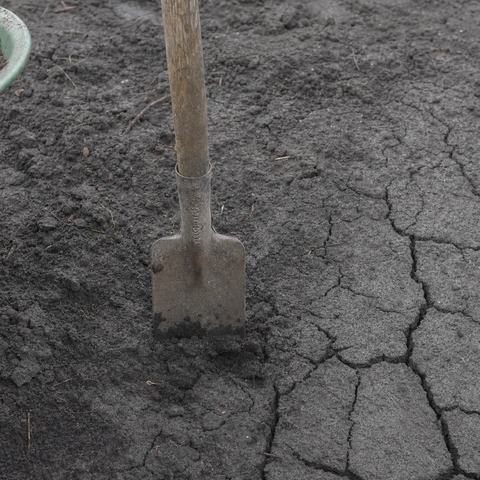
Much of the bottomland along the Brazos is heavy clay. When it is wet it sticks to boots and tools in thick slabs. When it dries in summer it shrinks and opens cracks wide enough to swallow a trowel. It is also rich, holds water well and, once it is managed, grows vegetables that sandy soils struggle with.
The first step is to find out what you have. The Web Soil Survey lets you draw a box around your property and read the mapped soil series, its drainage class and its shrink-swell rating. A simple jar test with a scoop of soil, water and a day of settling will show the share of sand, silt and clay in your own beds.
Never work it wet
The fastest way to ruin clay is to dig or till it when it is wet. The particles smear together and dry into hard clods that take a season to break down. Squeeze a handful before you dig. If it holds a ribbon or leaves your palm shiny, wait a few days. If it crumbles when you press it, the timing is right.
Compost, every season
Organic matter is what turns clay from a brick into a garden. Spread two or three inches of compost over the beds before each planting season and work it into the top few inches, or simply leave it on top and let worms and roots do the mixing. Shredded leaves, aged manure and spent plants all count. The improvement is slow, and after three or four years the difference in tilth is obvious.
Skip the advice to add sand. A little sand in a lot of clay makes something closer to concrete, and compost does the job better.
Raise the beds
Raised beds, even simple mounded rows six to eight inches high, solve the drainage problem that drowns roots after a heavy spring rain. They warm faster in February and they let you add compost where it does the most good. Leave the paths in grass or wood chips so you never walk on the growing soil.
Mulch against the cracks
In summer a thick layer of mulch keeps the clay from drying out and splitting around roots. Straw, shredded leaves or hay that has not been sprayed all work. Keep it a few inches deep and pull it back slightly from stems. Cracks that do open can be watered slowly and filled with compost.