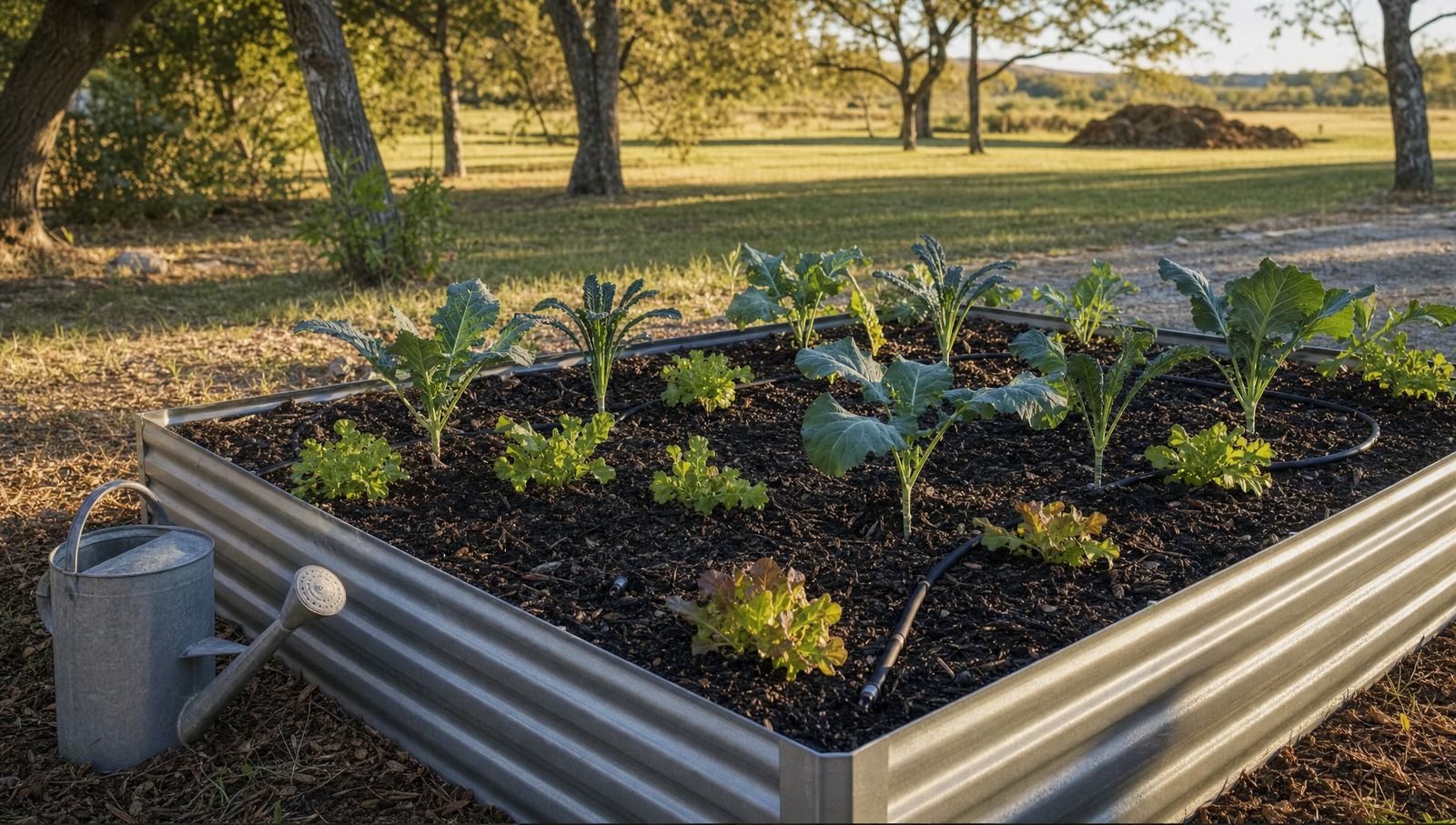
Fall is the real planting season here
The second spring that most newcomers miss, and how to plan for it in August heat.
Gardeners who move to the Brazos Valley from somewhere colder usually plant their first garden in March, watch it do well for six weeks, and then watch it cook. The lesson takes a year to learn. In this part of Texas the long, forgiving growing season comes in the fall, and the spring season is a short sprint between the last frost and the first hundred-degree week.
Why fall works so well
The fall garden starts in heat and finishes in cool weather, which is exactly what most leafy and root crops want. Seeds germinate quickly in warm soil. Transplants settle in while the days are still long. Then, as the nights cool in October and November, broccoli heads tighten, carrots sweeten and lettuce stops bolting. Insects that hammer the spring garden slow down as the temperature drops.
The Brazos Valley sits in USDA zone 9a on the current plant hardiness map, and a hard freeze usually holds off until December, sometimes later. That leaves room for a crop of broccoli, a crop of greens, and a planting of garlic and onions that will sit through winter and finish in late spring.
A working calendar
Dates move a week or two with each year's weather, but this sequence holds up well:
- Late July to mid August: start broccoli, cabbage and cauliflower seed indoors or in a shaded flat. Plant fall tomatoes and peppers as transplants if you want a second summer crop.
- Late August to September: set out the brassica transplants. Direct seed beans and cucumbers for a quick fall crop before cold weather.
- September to October: direct seed carrots, beets, turnips, radishes, spinach, lettuce, chard and collards. Sow in small batches two or three weeks apart so the harvest does not land all at once.
- October to November: plant garlic cloves and onion sets or transplants. Sow more lettuce and spinach under row cover if you want salad through the winter.
Getting seeds up in hot soil
The hard part of fall planting is the first two weeks. Soil in late August can top a hundred degrees an inch down, which kills lettuce and spinach seed outright and dries out the surface before carrots can break through. A few habits make the difference:
Water the row deeply the evening before you sow, then sow in the late afternoon. Cover the seeded row with a board, a strip of burlap or a length of shade cloth to hold moisture and cut the heat, and check it every morning. The moment the first seedlings appear, lift the cover. Lettuce germinates better if the seed spends a night or two in the refrigerator first.
Transplants need shade for their first few days in the ground. A scrap of shade cloth on hoops, or even a lawn chair set over the bed at midday, will carry them through the transplant shock. Water them daily until new growth starts, then back off to deep watering every few days.
Planning space for two seasons
The catch in a fall garden is that the summer garden is still growing when the fall plants need to go in. Okra and southern peas can run into October, and fall tomatoes need the beds through November. Decide in July which beds will turn over and when. Some gardeners pull the spring tomatoes in July, solarize or rest that bed for a month, and then use it for the brassicas in September.
Keep a simple record of what went where and when. After two or three years the notebook becomes the most valuable tool in the shed, because it shows which planting dates actually worked on your own ground.
When the first freeze comes
Most cool-season crops shrug off a light frost, and kale, collards and carrots often taste better after one. Lettuce and young transplants need cover when the forecast drops into the upper twenties. Keep frost cloth and a few clamps by the back door from Thanksgiving on, and the fall garden will carry right through to spring.