Watering through an August that will not end
Drip lines, mulch and early mornings keep a summer garden alive on less water.
By August in the Brazos Valley the question is no longer how to grow more. It is how to keep what is already planted alive until the weather breaks. Afternoons sit near a hundred degrees, the wind pulls moisture out of every leaf, and a sprinkler run at noon loses much of its water to the air before it reaches the soil.
Put the water at the roots
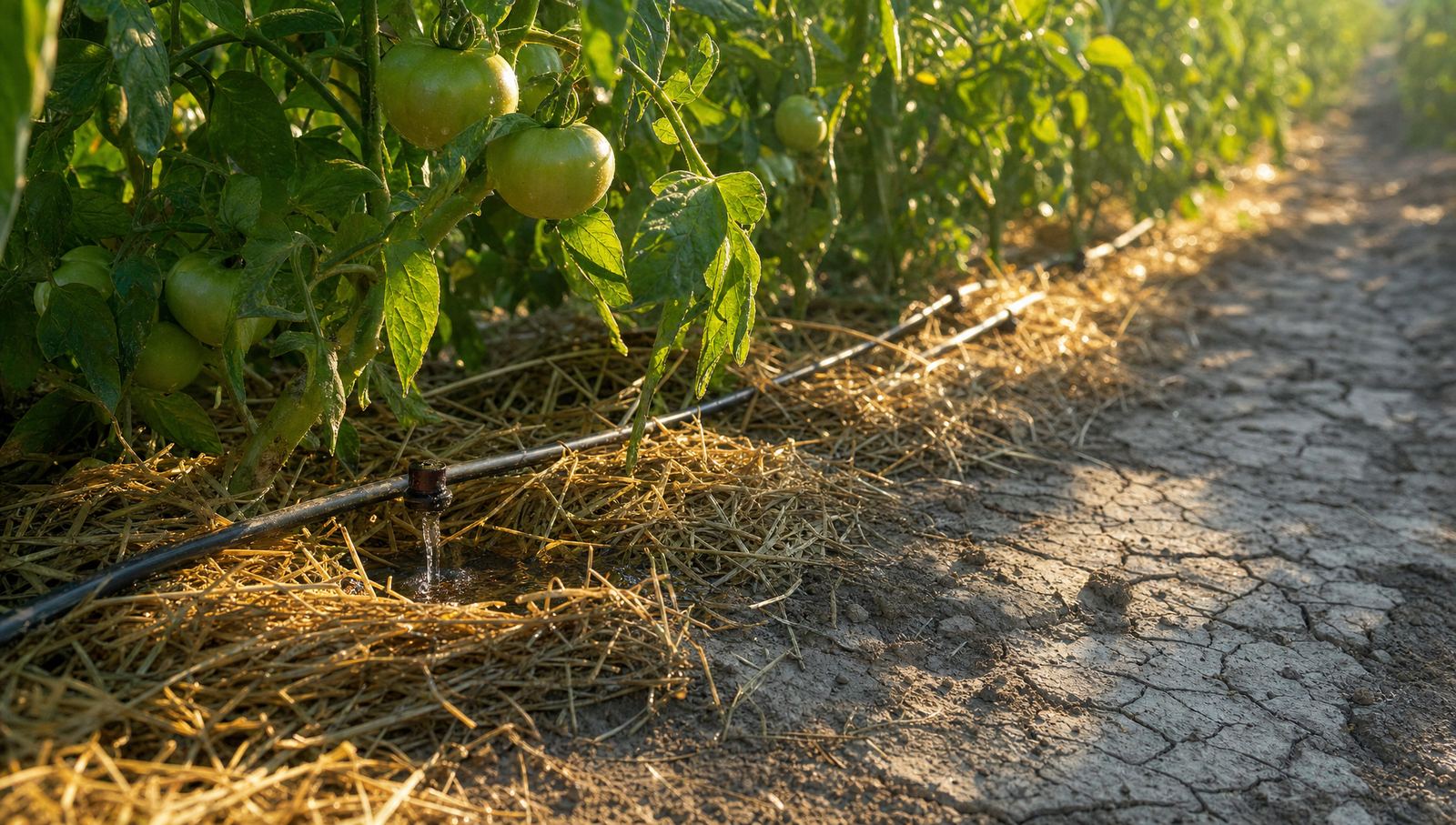
Drip irrigation is the single biggest improvement a summer garden can get. A drip line or soaker hose laid along each row puts water directly into the root zone, keeps the leaves dry, which cuts down on disease, and wastes very little. A basic kit with a pressure regulator, a filter and half-inch tubing costs less than one season of lost tomatoes. Add a battery timer at the spigot and the garden gets watered whether you are home or not.
Water early and deep
Run the water between first light and mid morning. The soil takes it in before the heat arrives, and the plants start the day full. Evening watering also works on drip, but overhead water at night keeps the leaves wet for hours and invites fungus.
Deep, less frequent watering trains roots to go down where the soil stays cool. A good target is about an inch of water a week in moderate weather and closer to two inches in the worst of August, delivered in two or three long runs. Push a finger or a screwdriver into the soil before you water. If it is damp four inches down, wait a day.
Mulch is part of the system
Bare soil in August bakes and crusts. A three to four inch layer of straw or shredded leaves over the drip lines can cut evaporation by half and keeps the soil temperature in a range where roots still work. It also hides the tubing from the sun, which makes it last longer.
Know when to let go
Spring tomatoes rarely set fruit once nights stay above the mid seventies, and squash plants worn down by vine borers seldom recover. Pulling them in July frees water and space for the plants that thrive in heat and for the fall garden that follows. Save your water for okra, peppers, southern peas and the young fall transplants.