Saving seed from a good tomato
Pick the best plant, ferment the seed for a few days, and dry it slowly.
Every garden has a tomato plant that does better than the rest: it sets fruit in the heat, shrugs off leaf spot, or simply tastes the best. If that plant is an open-pollinated or heirloom variety, its seed will grow the same tomato next year, and after a few seasons of saving from the best plant the line starts to suit your garden. Hybrid seed does not come true, so check the label first.
Mark the plant early
Decide which plant you are saving from while it is still producing well. By the end of the season every plant looks tired. Tie a strip of ribbon to the stake so it does not get pulled by mistake. Tomatoes mostly pollinate themselves, so crossing between varieties is uncommon, but if you grow several kinds side by side, give the chosen plant a few feet of space from its neighbors or save from fruit set on its inner branches.
Choose the fruit
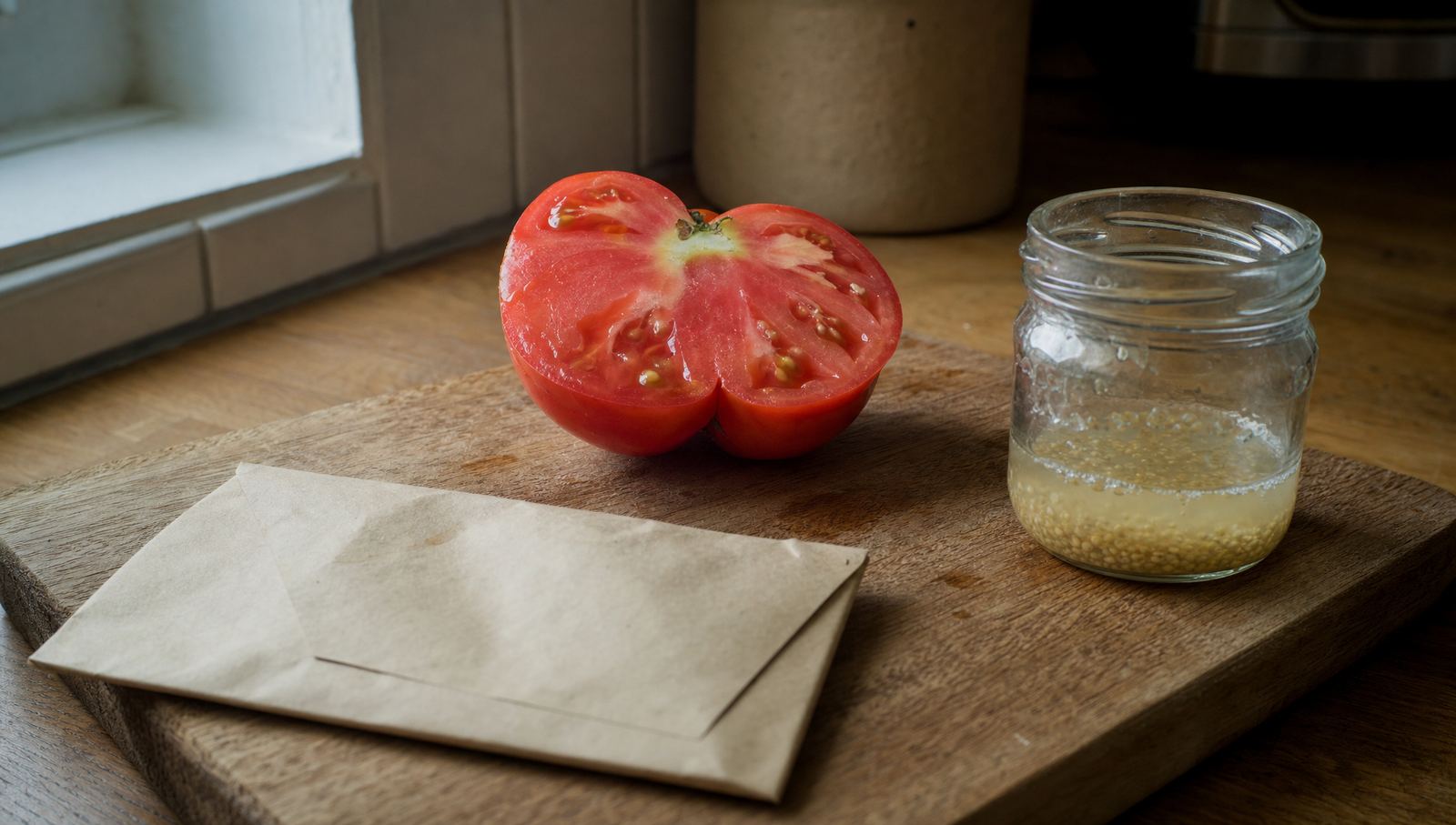
Pick two or three fully ripe, healthy tomatoes from the best plant, a little riper than you would eat. Cut them across the middle and squeeze the seeds and gel into a small jar. The rest of the tomato is still good for the kitchen, so nothing goes to waste. Use a separate jar for each variety and write its name on a strip of tape on the side.
Ferment the seed
Add a little water and leave the jar somewhere warm and out of the sun for two to four days, stirring once a day. A layer of mold will form on top. That is normal. Fermentation breaks down the gel coat that keeps seeds from sprouting and helps clear some seed-borne disease. Good seeds sink; pour off the mold, the pulp and the floating seeds.
Rinse and dry
Rinse the seeds in a fine strainer, then spread them on a ceramic plate or a coffee filter to dry for a week, out of direct sun. Stir them around once or twice so they do not clump. When they are dry enough to snap rather than bend, put them in a paper envelope, write the variety and year on it, and store them in a cool, dry place. Tomato seed kept this way stays good for several years.
Test it before you count on it
A few weeks before planting time, roll ten seeds in a damp paper towel, slip it into a plastic bag and leave it somewhere warm. Count how many have sprouted after a week. Eight or more is a good batch. Fewer than five means sowing thickly or starting over from the next good tomato.